
Hydration Myths: How Much Water Do You Really Need?
Water needs differ by climate, exercise, body size, diet and health conditions. A fixed number of litres is not right for everyone, especially in very hot regions or for people with fluid restrictions.
Look at the full picture
Fluids come from water, other drinks and water-rich foods such as fruit and soup. Thirst and urine colour can be useful clues for many healthy adults but are imperfect measures.
When needs change
Hot weather, fever, vomiting, diarrhoea and prolonged exercise can increase fluid losses. Some medical conditions require careful fluid or electrolyte guidance from a clinician.
Practical hydration habits
Keep a water bottle accessible, offer water with meals and favour unsweetened drinks most of the time. Sports drinks are not necessary for typical sedentary days.
Practical takeaways
- Drink regularly when thirsty and around activity.
- Choose water over sugar-sweetened drinks often.
- Ask your clinician if you have kidney, heart or fluid-balance conditions.
Frequently asked questions
Does coffee count toward fluids?
Yes, beverages can contribute to intake, although caffeine tolerance varies.
Should urine always be clear?
No. Persistently completely clear urine is not a useful universal target.
Personal nutrition support
Interested in food choices that match your preferences, routine and personal goals? Explore The Diet Co.’s personalised nutrition consultation options and ask about a plan tailored to your needs. Results vary, and medical needs should be discussed with qualified healthcare professionals.
Further reading
General nutrition education, not individualized diagnosis or treatment. Discuss medical conditions, medicines and dietary changes with your qualified healthcare team.
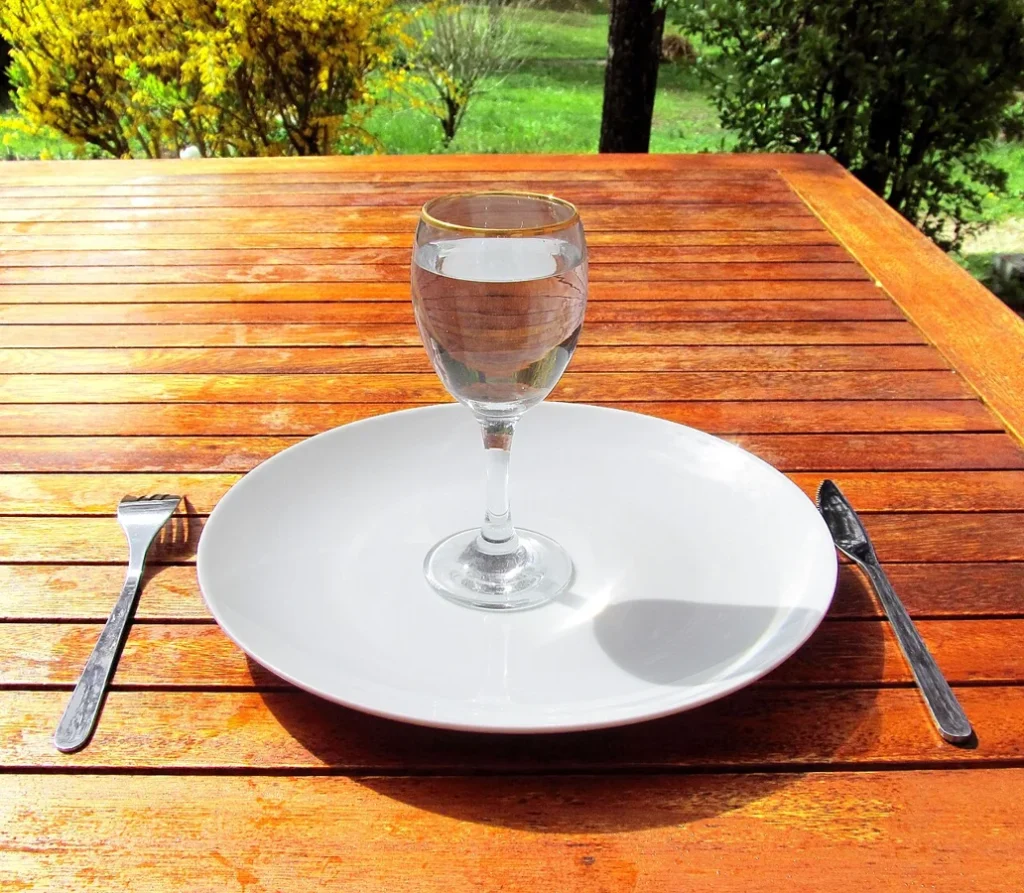
Illustrative photo: File:Fasting 4-Fasting-a-glass-of-water-on-an-empty-plate.jpg by Dr Jean Fortunet · CC BY-SA 3.0. Resized and converted to WebP.