
High-Protein Meals for Weight Loss: A Practical Global Guide
Protein is one helpful part of a satisfying meal, but it does not make weight loss automatic. Across cuisines, the most workable approach is to combine protein with vegetables, fibre-rich carbohydrates and a sensible amount of healthy fat.
Why protein matters
Protein contributes to muscle maintenance and can help meals feel satisfying. Needs vary with body size, age, activity and health status; there is no single daily target for everyone. People with kidney disease should discuss high-protein eating with their clinical team.
Build a balanced protein plate
Start with fish, eggs, poultry, tofu, tempeh, beans, lentils or Greek-style yoghurt. Add a colourful vegetable, a wholegrain or starchy vegetable, and an unsaturated-fat source. This approach works with Mexican burrito bowls, Japanese rice bowls and Mediterranean plates.
Meal examples from around the world
Breakfast: plain yoghurt, berries, oats and seeds. Lunch: lentil and quinoa salad with vegetables. Dinner: baked salmon or tofu, roasted broccoli and brown rice. For a snack, try edamame or hummus with peppers. Portion sizes should suit appetite and energy needs.
Practical takeaways
- Choose a protein source you enjoy rather than forcing the same food daily.
- Use pulses several times a week for protein plus fibre.
- Plan vegetables and whole grains along with protein.
Frequently asked questions
Do I need protein powder?
Usually not; many people can meet their needs with food. Supplements may be convenient in particular circumstances.
Does more protein mean faster fat loss?
No. Overall energy balance and sustainable habits still matter.
Personal nutrition support
Interested in food choices that match your preferences, routine and personal goals? Explore The Diet Co.’s personalised nutrition consultation options and ask about a plan tailored to your needs. Results vary, and medical needs should be discussed with qualified healthcare professionals.
Further reading
General nutrition education, not individualized diagnosis or treatment. Discuss medical conditions, medicines and dietary changes with your qualified healthcare team.
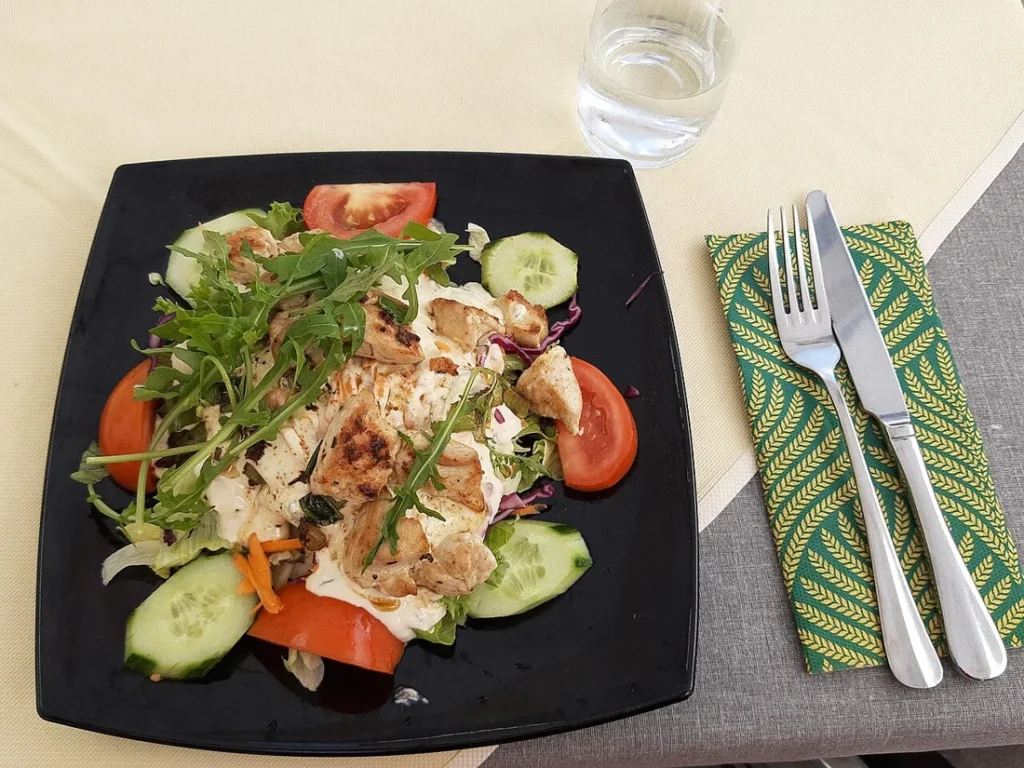
Illustrative photo: File:Salad with chicken, Holzheim.jpg by Gerda Arendt · CC0. Resized and converted to WebP.